

This feels especially true at a time when the world feels more unpredictable than it used to. Some long-established systems no longer work in the same way, or offer the certainty they once did. That’s a lot for anyone to navigate, and when you’re responsible for a team as well, the pressure increases further. Leadership during change can sometimes ask more of us, emotionally and mentally, than we allow ourselves grace for.
At HumanKind, we talk about creating space for people to think clearly, lead well, and protect their wellbeing. Emotional intelligence sits right at the heart of that. It’s not theoretical - it becomes clearly visible when roles are evolving, expectations are unclear, and leaders are navigating change, while still needing to be there for others.
My own experience of working within established organisations, and then co-creating something new, has shown me just how emotionally complex leadership can be. After all, change rarely happens in clean phases. More often, it brings uncertainty, overlapping roles, and the pressure to maintain momentum, while also protecting our own wellbeing and relationships with those around us.
That lived experience is a big part of why I do this work. I’ve seen first-hand how much difference the right support can make for leaders navigating complexity and change.
So what do we mean by emotional intelligence?
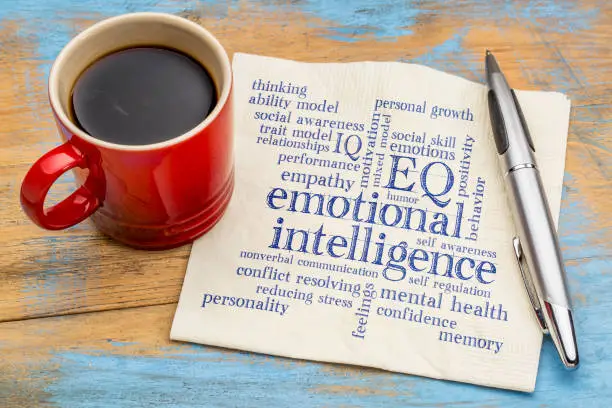
At its simplest, emotional intelligence is about noticing what’s happening within ourselves and around us, and choosing how we respond with care, honesty and intention.
What emotional intelligence looks like in leadership
In leadership, emotional intelligence becomes most visible during periods of change and uncertainty. It shapes how leaders respond when expectations feel unclear, pressure increases, and decisions need to be made without all the answers.
It’s often associated with adaptability, empathy and understanding. Those qualities matter, particularly in times of transition. In my work, I see them having the greatest impact when they’re grounded in self-trust and sustainable ways of working.
Without that grounding, leaders can find themselves constantly adjusting, responding to what feels loud or urgent, and slowly losing their own sense of direction in the process. Emotional intelligence in practice is about noticing what’s happening, internally and externally, and choosing how to respond in a way that supports both performance and wellbeing - for ourselves and others.
Seen this way, emotional intelligence isn’t measured by how much we carry. It’s about knowing what we can carry without losing ourselves in the process, and when to ask for support.
Leading with steadiness through change
Periods of transition test even the most experienced of leaders. Structures shift, priorities evolve, and uncertainty can become the backdrop to day-to-day decision-making. This is where creating space matters most - space to think, to regain clarity, and to lead, from a place that’s grounded and considered, rather than reactive.
This is the work I’m engaged in now, and it’s the perspective I bring to HumanKind. Emotional intelligence isn’t a skill you master once; it’s something leaders continually practise and refine as their context changes.
At HumanKind, we support founders and leaders of SMEs to navigate change with steadiness and care - creating the conditions for sustainable leadership and wellbeing, even when things feel uncertain.
FAQs
Emotional intelligence in leadership is the ability to notice what’s happening within yourself and around you, and respond with clarity, care and intention. It plays a critical role during periods of change and uncertainty.
Leadership during change often brings increased pressure, ambiguity and emotional load, so emotional intelligence helps leaders stay grounded, communicate clearly and support both performance and wellbeing of themselves and their team.
By creating awareness, boundaries and space to think, emotional intelligence supports sustainable leadership - helping leaders navigate uncertainty without losing themselves in the process.
Emotional intelligence isn’t something people arrive at in the same way. We’re all at different points, and it can develop over time when individuals are open to it, shaped by self-awareness, experience and reflection. For many leaders, it deepens through lived experience, particularly during periods of change, when they’re required to notice more, pause more often, and respond more intentionally.
Many leaders start to sense it when things feel heavier than usual. Decisions take more effort, or they notice they’re carrying a lot internally while trying to stay steady for others. It might show up as feeling more reactive, more tired, or less sure than they’re used to, even when things appear fine on the surface. Needing support isn’t a sign that something is wrong. Often, it’s a sign of experienced, thoughtful leadership, recognising when creating space would help as the role becomes more complex.
Yes we do. From our base on the edge of the Cotswolds, we offer in-person support within around an hour of Pershore, covering Worcestershire, and areas of Warwickshire, Gloucestershire and Birmingham too. We also offer online support to businesses across the UK.